How to make sure you never miss out on any DS Music updates!
I love what I do! Creating resources and content built upon sequential and rigorous music literacy and then, getting to share it with all of you. Sometimes I will churn out a bunch of exciting worksheets, videos and exercises, and am then keen to get the word out and some feedback in return.
Facebook is a great place for this because I can instantly share my content with you and see your reactions and suggestions and requests in real time. This is the interactive part of social media I really enjoy, though, to be honest, there are other sides to the platform I am not such a fan of. Algorithms, for instance.
So Facebook crunches the numbers based on what you click on and decides what then to show you, which can mean that over time, the DS Music Classroom Music Teacher Support Page might disappear off your news feed. When that happens, you might very well miss out on one of my content shares or a thrilling happy snap of Brodie the office dog.
To prevent this, please follow these quick steps:
In addition, selecting “See First” lets you receive posts from my page in your News Feed as soon as a fun and fundamental (see what I did there?) resource arrives. If you haven’t already, be sure to click the “following button” on my page.
Remember too, that the more you like, comment and share the posts on my page, the happier you make the Facebook algorithm, plus it is great for me to see everyone interact.
Thanks for your support! Keep making wonderful music! – Deb
 Sometimes, the worst situations can bring out the best in people:
Here at DSMusic it has made me start creating those fully interactive resources I have been wanting to for ages!
For all of you amazing teachers out there trying to work out how to teach a fun, rigorous, sequential and developmental music literacy program online – I am here to help in any way I can!
Here’s what is happening so far:
All Digital Resources available on the DSMusic Website for are now free to access for everyone regardless of which Musicianship & Aural Training for the Secondary School Books you own.
The only exceptions to this are that the online exams for each Level 1 and 2 along with the assignments and curriculum documents etc are still only available with the ownership of the relevant books.
All Level 1, 2 and 3 Print Books are now available to purchase as Digital Only (PDF) versions.
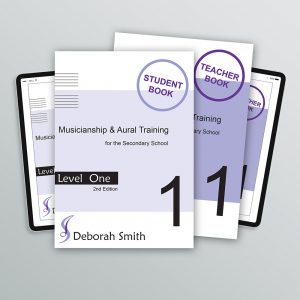
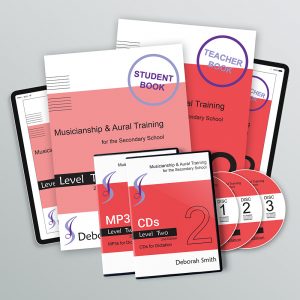
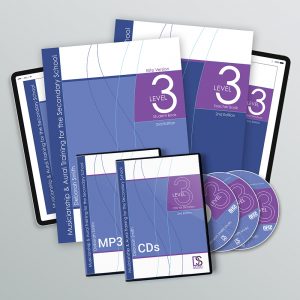
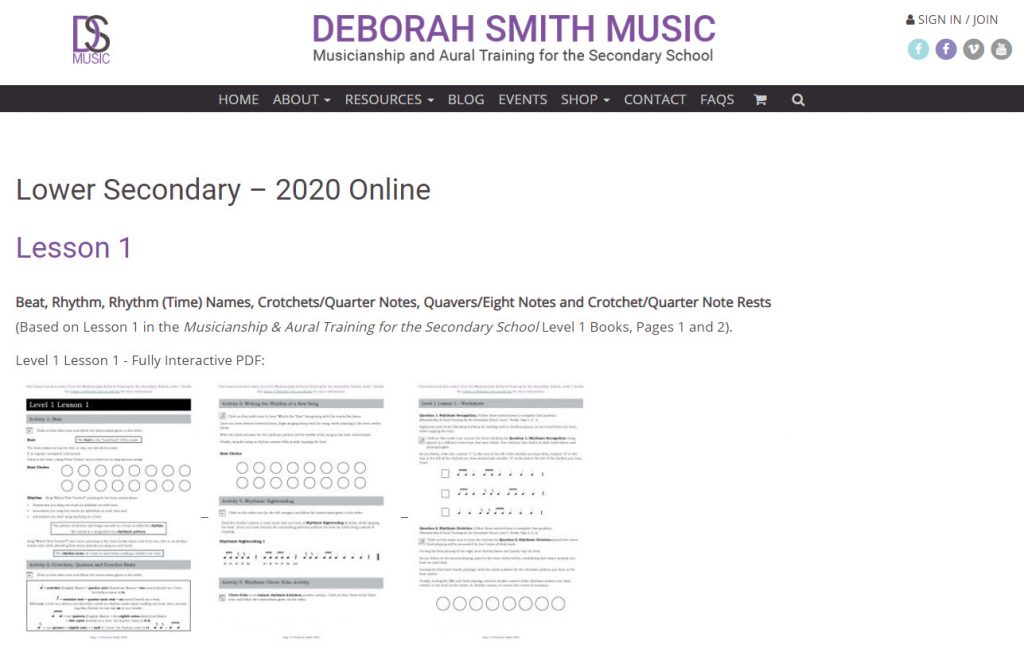
All lessons from the Musicianship & Aural Training for the Secondary School Level 1 books are being turned into fully interactive online lessons. These will include click through links to teaching videos and audio files, the MP3 files for dictation questions AND the answers.
Click here to access Lessons 1 and 5 completed for you and your students:
—————————————————————————————————-
—————————————————————————————-
In addition I am working on creating MP3s for all dictation activities in Level 1 along with audio files of song material being sung in relevant ways so watch this space!
All lessons from the Musicianship & Aural Training for the Secondary School Level 3 and Decoding Sound books are being turned into fully interactive online lessons. These will include instructions and advice on how to use the click through links to videos, audio files, and worksheets etc AND the answers to all dictation and theory questions for our students to access.
Click here to access the Section 1 – Rhythm + The Elements of Music Part 1 Lesson completed for you and your students.


Universal Music Education
Welcome to 2020 and our first post for the year. This article has been kindly  shared by Walter Bitner: a multi-instrumentalist, singer, conductor, and teacher, and serves as Director of Education & Community Engagement for the Richmond Symphony in Richmond, Virginia, USA. He writes about music and education on his website Off The Podium at walterbitner.com, and his column Off The Podium is featured in Choral Director magazine and as a weekly blog on the American Choral Directors Association‘s global networking community website ChoralNet. Thanks Walter!
As we enter the third decade of the twenty-first century, the time has come for music educators to stop pussyfooting around and advocate for Universal Music Education. Indeed, it is long past time. We should stop wasting valuable time – time that belongs to us and to the children in our care – we should stop seeking compromise solutions that merely seek to preserve music education’s place in school curriculum, a place that is in most cases completely upside-down, a place that has fallen into neglect and disrepute over that last decades, a place that was rarely or never ideal in the first place. It is time to advocate for what is truly needed by our children and our society: a comprehensive music education for every child in every school.
Music Education belongs in the life of every child, and this means: every child who graduates from high school should have received a music education that provided her with the skills to: sing fluently, play an instrument fluently, and read and write music notation with enough skill to participate in musical ensembles with satisfying results; have a working knowledge of music history and music theory that provides them with an appreciation of the art form and its place in human culture; and experienced the profound moments of social harmony and personal fulfillment that can arise from the rehearsal and performance process.
Universal Music Education is music education for every child.
Even in most schools that boast of robust music programs, participation is by a minority of students. In the cities I have lived and worked in, some with vaunted music education programs, only about one fourth of high school students enroll in any music class during their high school years.
Our Music Education System Is Upside Down
Despite the fact that we know that the developmental “window” during which children have the greatest aptitude for learning all of the musical skills described above – the “golden age” of the elementary school years between the “age of reason” attained around age seven and the onset of puberty – most elementary school music programs do not provide children with the significant achievement of any of these skills before they reach middle school. This is by design: most elementary school music programs are not set up to provide children with the frequency, repetition, or intensity required to develop these skills.
Most middle school music programs therefore begin with a severe handicap: students are introduced to the experience of ensemble music when the time has already passed at which they would most readily embrace it and develop the skills to be successful at it. For most children, by the time they are offered the opportunity for any real musical training, it is too late. Because of this situation, in their middle school years the majority of children are discouraged from pursuing musical activity in school, even if they are introduced to music classes during an “arts rotation” or some other introductory survey, and by high school most students elect not to participate in music classes at all.
This design for music education in our schools produces the current atmosphere of competition that dominates the entire music education culture, and perpetuates the myth that musical talent is a kind of giftedness reserved for a lucky minority of the population. The competition design is maintained, supported, and promoted by our professional music education organizations, whose primary activities are organizing competitions. (see Is Music a Sport?)
The exact opposite is in fact the truth. Musical talent is dirt cheap: everybody has it. The activity, solace, and joy of music is the birthright of every human being, and does not belong only to a select, “talented” few. Music is too important to be left only to the professionals – it belongs to everyone, and always has, in every culture, in every time and place. (see Is Music a Commodity?)
A Very Old Idea
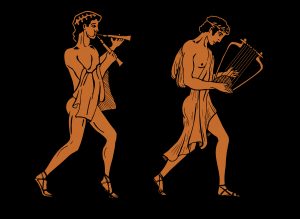
The emphasis on music as a “core” subject which every student must study in school is not a new idea – it has been around for about three thousand years. The ancient Greeks included music as one of the seven essential components of a liberal arts education: grammar, logic, and rhetoric (the trivium) and arithmetic, geometry, music, and astronomy (the quadrivium). The founders of western civilization considered these skills – including music – necessary preparation for citizens to participate in a free society, with all of its attendant responsibilities. (see What the ‘liberal’ in ‘liberal arts’ actually means by Valerie Strauss, The Washington Post)
“The man that hath no music in himself,
Nor is not moved
with concord of sweet sounds,
Is fit for treasons, stratagems and spoils”
~ William Shakespeare
The Merchant of Venice, 5.1.83-85
This famous quote from the author generally regarded as the greatest ever to write in English (which I chose as the motto for Off The Podium when I began to write in 2015) describes the general attitude about music education of the European Renaissance: those who have not received an education in music cannot be trusted.
The Purpose of Music Education
Opponents of Universal Music Education will protest that including music as a core subject is too expensive. But the costs to our society of not including music education as a core subject are much greater. Some 2.3 million Americans are incarcerated in the United States, more than in any other nation. Although I am not aware that a survey of the music education backgrounds of U.S. convicts has ever been attempted, it is a safe bet that only a small minority of those behind bars were given a comprehensive music education, and as children did not experience the positive social and emotional benefits that are central to music education. (see What Your Students Will Remember)
As I described in Wholehearted Attention, “students who sing in choir  or play in band or orchestra must simultaneously perform a complex set of operations that call on more aspects of the human being than any other activity they face in school”. This wholehearted attention demanded by musical activity from every participant – complete absorption in the moment in which all other thoughts and concerns disappear – provides the rare opportunity for the child to experience the harmonious engagement of all parts of herself at once: physical, intellectual, and emotional engagement within a collaborative social context.
“We do not learn from experience… we learn from reflecting on experience.”
~ John Dewey
(1859-1952)
Musical activity demands wholehearted attention and this state presents the child with opportunity and means to integrate experience, thought, feelings, and sensations in a complete and challenging way that no other school activity can provide. When the music education environment is carefully cultivated, the child is presented with material that assists her in reflecting on experience in an emotionally safe social setting, and she returns to the state of wholehearted attention on a daily basis. In this way a fertile ground is prepared for the development of consciousness, which in turn makes it possible for the child to become acquainted with conscience in a manner that is free, intimate, and sustained. (see Walter’s Working Model)
The development of this relationship with the inner voice of the psyche – this practice of return to ourselves – this is the purpose of music education.
Universal Music Education is a call to conscience.
Songs
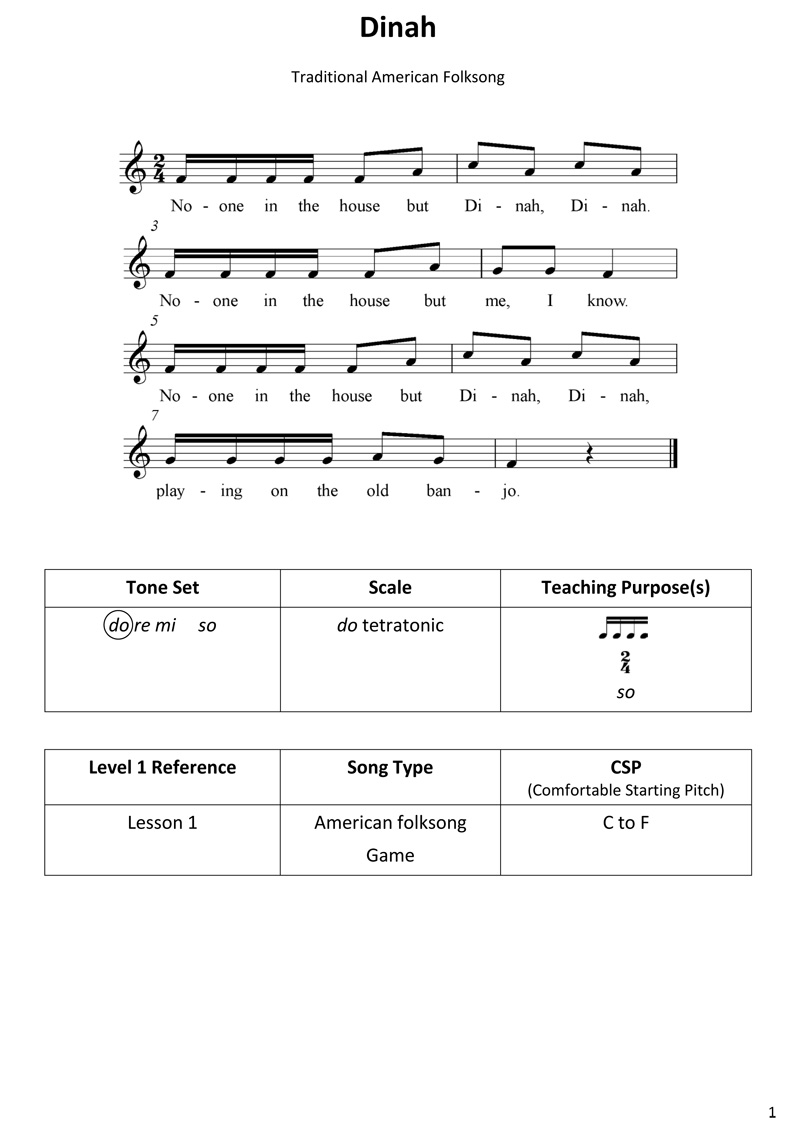
Dinah – Sheet music and game instructions
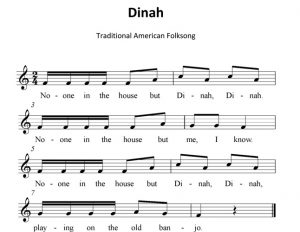
Dinah – Video of actions (this one is just here for show)
Canons
Exercises
Level 1
Level 2
Level 3
Art Music Connections:
Dance of the Mirlitons from the Nutcracker Suite – Tchaikovsky
Rondo alla Turca – Mozart
Can Can – Offenbach
Present
Objective: Students will learn the rhythmic duration name for semiquavers and imitate the teacher in performing this.
Steps:
Review
Point
Reinforce
Click here for above written out as focus activity.
Click here for video of above activity.
Re-Present
The above “Present” segment should be repeated using different repertoire, preferably in the next music lesson.
Preparation – aural discovery
Objective 1. Students will discover a new sound that is not one, two or no sounds on a beat.
Steps:
Review
Point
Reinforce
Click here for above written out as focus activity.
Click here for video of above activity.
Objective 2. Students discover that the new rhythm has four sounds on a beat.
Steps:
Review
Point
A: Four
Reinforce
Click here for above written out as focus activity.
Click here for video of above activity.
Preparation – visual discovery
Objective: Students will use visual symbols to represent four sounds on a beat
Steps:
Review
Point
Reinforce
Click here for above written out as focus activity.
Click here for video of above activity.
Learning Intentions/ Objectives/Outcomes
By the completion of this strategy students will be able to:
 crotchets, quavers, crotchet rests & semiquavers in known and unknown songs.
Prerequisite skills / knowledge
Songs for teaching semiquavers
Art Music Connections:
Dance of the Mirlitons from the Nutcracker Suite – Tchaikovsky
Rondo alla Turca – Mozart
Can Can – Offenbach
Preparation – Aural Discovery Objectives 1 and 2 and Visual Discovery Objective 1
Practice

IDEAS FOR RIK:
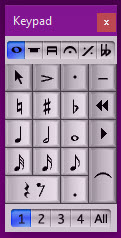
This is where having a blank music staff where we can drag and drop notes onto a staff – like in Sibelius – would be amazing so teachers can work through transcription activities with their classes on the screen for all to see! (This will also lead to the student workbooks being able to do this too!!!)
Would be good if it has a playback option so they can hear what they have written and compare it to the given example.
Have a look at the “What’s New” video on Auralia here: https://www.risingsoftware.com/auralia for more ideas on how they do this
ALSO the “Follow via email” stuff would be removed from this page
Ideas….
Each given rhythm would have TWO audio tracks – ONE with the rhythm names being said and one with just the rhythm as in the ones given.
NOTE – these are not the actual examples (no semiquavers and all the same!) Is just to give an idea of how it might work. ALSO the “Follow via email” stuff would be removed from this page
Semiquavers Rhythmic Sightreading Exercise 1

Semiquavers Rhythmic Sightreading Exercise 2
Semiquavers Rhythmic Sightreading Exercise 3
Welcome to our third guest post, kindly written and shared by Drew Schweppe. Drew (IES Abroad Vienna, Fall 2010 | Ithaca College), is the Founder and Managing Director of Informusic, the first all-in-one music history resource for smart phones and tablets. Thanks so much Drew!
A few weeks back I was catching up with a colleague of mine who is currently the Director of Bands at a public high school in the U.S. During our conversation he said something that struck us both as rather troubling – “My students don’t know much about the composers whose music they play.”
 This is something that I’ve been hearing from high school music educators for quite sometime now. To take that a step further, music students most likely don’t know the historical context in which a composition was written either. Perhaps your orchestra students are learning about Napoleon in their social studies classes, but do they make the connection that Napoleon’s Europe was the environment in which Beethoven composed? Or maybe your private piano student is preparing a mazurka by Chopin—do you think your student understands what influenced Chopin to write in this style? I would predict, probably not.
You’re probably thinking music history?! I have a hard enough time getting my students to remember to bring their instrument to school! Don’t worry, I have a strategy to help you! But first, a bit more background. There comes a time in every music student’s education when understanding the historical context in which a musical composition was created is as important as learning the notes and rhythms in the score. A symphony written by Shostakovich under the reign of the Soviet regime is going to sound vastly different to a Symphony written by Haydn under the patronage of the Esterhazy. Providing your students with this knowledge can inspire them to prepare their parts with a purpose and can enhance the quality of performance for both the performer and audience.
 One of my favorite professors and mentors taught me to think of music history as a roadmap with landmarks and intersections. Take for example, Stravinsky’s The Rite of Spring. The ballet stretches the orchestra to its technical limits while (consciously or subconsciously) embodying the tenacious atmosphere throughout Europe on the brink of World War I. By using the start of World War I as my landmark (1914), I know that The Rite of Spring was written just before it (1913). There are numerous examples where the sentiment of a political movement can be heard in the music of its time.
Beethoven originally dedicated his Third Symphony to Napoleon in 1803 but later retracted the dedication in 1804 after Napoleon appointed himself emperor in May. The Eroica (Heroic) symphony can certainly be recognized as sounding, well, heroic, but do your students know the origins of the title and the events that caused Beethoven to write such music?
How can a political event influence an entire genre of music? Well, did you know that Chopin’s Polish style compositions were ignited in 1830? While he was on tour in Vienna, the November Uprising of 1830 occurred in the composer’s native land of Poland. Chopin found himself homesick for Poland and began writing music in a more Polish style as a result.
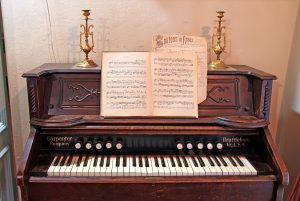 For those teaching music of the Baroque, did you know that a technological advancement in France changed the trajectory of the Baroque era? The rise of the clavecin in France replaced the lute as the prevalent instrument throughout Europe and thus created a shift in the 1660s from Italian influence in music to French influence in music.
These are just a few examples to explore with your students. Here are a few questions your students can ask themselves while preparing a piece of music:
When was this composition written?
Where?
What other artistic and political events corresponded with the creation of this composition?
How will the answers to the above questions influence the way I perform this piece?
The Oxford English dictionary gives the definition of the word echo as “a sound or sounds caused by the reflection of sound waves from a surface back to the listener”. [1]
In the classroom, echoing is an activity in which something is performed firstly by the teacher and is then repeated by the students.
For example, in the music classroom, a teacher could play or sing a melody for the students to sing back. Or a rhythm is played on a drum for the students to clap it back. Or a series of chords (a chord progression) is played on the piano and the students sing back the bassline or the chords vertically and so on.
The problem with these activities is their limitations as far as what it tells us about what our students know. They only tell us that their students can reproduce the sound(s) that they are hearing and not much more.
Turning these activities into clever echoes adds a whole new level. The students must repeat what was performed for them labeling the names of the pitches or rhythms etc that were given to them.
You could think of clever echo as an instant dictation or transcription exercise.
Think of it in the same way as we think of learning a language.
Students learning a language are asked to “Write down what I say”. The teacher then reads a short phrase or sentence, using only words the student knows, then the students write that sentence, using their knowledge of how to spell the words they heard.
This is exactly what we are asking our music students to do when we give them any form of transcription exercise – they must know the “spelling” of the music before they can possibly know how to write it down. Using movable do or tonic solfa is the pitch “alphabet” and rhythm or time names are the rhythmic “alphabet” we use to “spell” the rhythms, melodies, harmonies we are given.
Clever echo activities should form a part of every music lesson, regardless of what stage of learning a class is at. They are also a great way to prepare for a transcription or dictation activity or other activities that use the elements found in the clever echo activity.
The basic rhythmic clever echo steps are:
Step 1: Teacher claps two, four or more beats using ONLY rhythms known by the students.
Step 2: Students clap this rhythm.
Step 3: Students clap and say the rhythm names of this rhythm.
Here is an example from the Musicianship & Aural Training for the Secondary School Level 3 (Upper Secondary) books:
and a higher level example from Jenn Gillan’s wesbite:
The basic melodic clever echo steps are:
Step 1: Teacher sings a melody, two, four or more beats long, using ONLY pitches known by the students, on a neutral syllable (such as “loo”).
Step 2: Students sing this melody (also using the neutral syllable).
Step 3: Students sing this melody in solfa with handsigns.
Optional Step 4: Students sing this melody in letter names in various keys.
Here is an example from the Musicianship & Aural Training for the Secondary School Level 3 (Upper Secondary) books:
The basic interval clever echo steps are:
Step 1: Teacher sings two notes, using pitches and creating intervals known by the students, on a neutral syllable (such as “loo”).
Step 2: Students sing these notes (also using the neutral syllable).
Step 3: Students sing these notes in solfa with handsigns (using either a particular key – in context – or from a given first note – in abstract) and label the interval between the two notes (e.g. Major 3rd, Perfect octave etc).
Here is an example from the Musicianship & Aural Training for the Secondary School Level 3 (Upper Secondary) books:
The basic harmony (chord) clever echo steps are:
Step 1: Teacher plays a chord – harmonically and then melodically (as an arpeggio – the notes played ascending then descending).
Step 2: Students sing this chord melodically (using the neutral syllable such as “loo”).
Step 3: Students sing this chord melodically in solfa with handsigns.
Optional Step 4: Students label the chord type of this chord (e.g. Major, minor etc.
Here is an example from the Musicianship & Aural Training for the Secondary School Level 3 (Upper Secondary) books:
The basic harmony (bassline) clever echo steps are:
Step 1: Teacher plays a chord progression (beginning with only two).
Step 2: Students sing the bassline of the chord progression (using the neutral syllable such as “loo”).
Step 3: Students sing the bassline of the chord progression in solfa with handsigns.
Optional Step 4: Students sing back each chord of the chord progression melodically in solfa with handsigns, labelling each chord with its position within the key (I, IV etc) and its chord type.
Here is an example from the Musicianship & Aural Training for the Secondary School Level 3 (Upper Secondary) books:
There are LOTS of other fun things you can add to these basic clever echo activities – but I will save these for another post!
Would love to hear your comments, ideas, suggestions for clever echo activities so please feel free
Happy teaching!
[1] https://en.oxforddictionaries.com/definition/echo
Just a quick post from me today (am in the middle of writing the 2nd Edition of the Level 3 books, CDs etc ready for 2017!)
I came across this action song when my daughter sang it ALL the way home in the car (it’s an hour drive!!!)
I can’t find the source or where it originates from but I did find videos of kids singing and doing the actions and I even found one of Rugby fans doing it to relieve a numb posterior!
Anyway – just thought I’d share because its a LOT of fun!
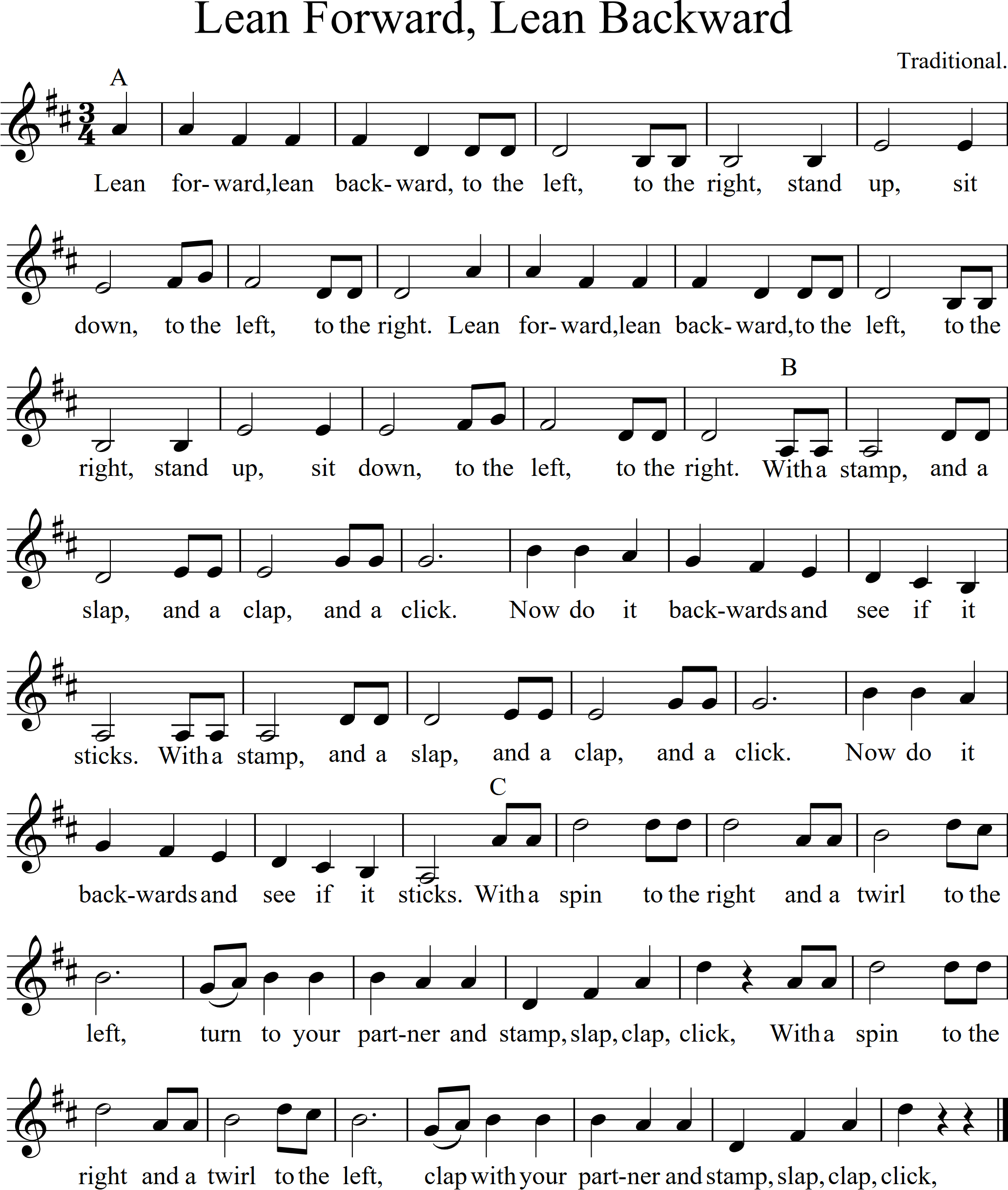
As you can see the actions pretty much follow the
words all the way through.
Begin sitting down (preferably on chairs).
It will help if you have numbered all the
children either “A” or “B”.
Follow the words until
“now do it backwards and see if it sticks”.
On these words you do the last four actions
in reverse: “click, clap, slap (your knees) stamp”.
Spin and twirl can be the same actions and can just be
a turn in the chair to the left and to the right.
On the words “turn to your partner” you ask the
“A” students to turn to their left and the
“B” students to turn to their right to find their partners.
On the word “clap”
they clap both their partners hands.
Extension actions –
do EVERYTHING in reverse to what the words say.
It is hilarious!
It’s not as easy as you think!
When we do a transcription exercise with our students in class that is exactly what we are practicing – the process of TRANSCRIPTION!
Yes of course we do have to learn and practice that process but it is learning and practicing the content of the transcription exercise that will actually help us get better.
If a language teacher only ever asked their students to “write down what I am saying” and did not spend time teaching content – vocabulary, spelling, grammar, sentence structure etc and then practicing and revising this content, then her students would not improve.
In our music classes we need to do the same and spend time teaching and then PRACTICING the content before we ask our students to recognise and transcribe it.
Let’s look at what our students need to KNOW in order to undertake the complex task of Melodic Transcription.
In order to be able to write down the notes from a melody we hear, onto the staff, we need to know the content of this melody very well.
The more singing and analysing our students do the better they will understand melodies and therefore be able to recognise most (if not all) of what they are expected to transcribe.
Rhythmic Transcription.
The same approach applies here but rhythmically instead of melodically.
Harmonic Transcription (Chord Progressions).
This is probably the area we find the most difficult to “practice” as individually we cannot sing harmony…..or can we?
Activities such as:
These are the activities that will learn and most importantly PRACTICE chord progressions.
All other types of music transcriptions can be learned, studied and practiced in the same manner – by SINGING everything related to that element and by analyzing everything about that element. In this way we find we really KNOW the content we are being asked to transcribe so well it’s like writing down notes as someone speaks English to us!
Hope this helps your students to see real improvement!
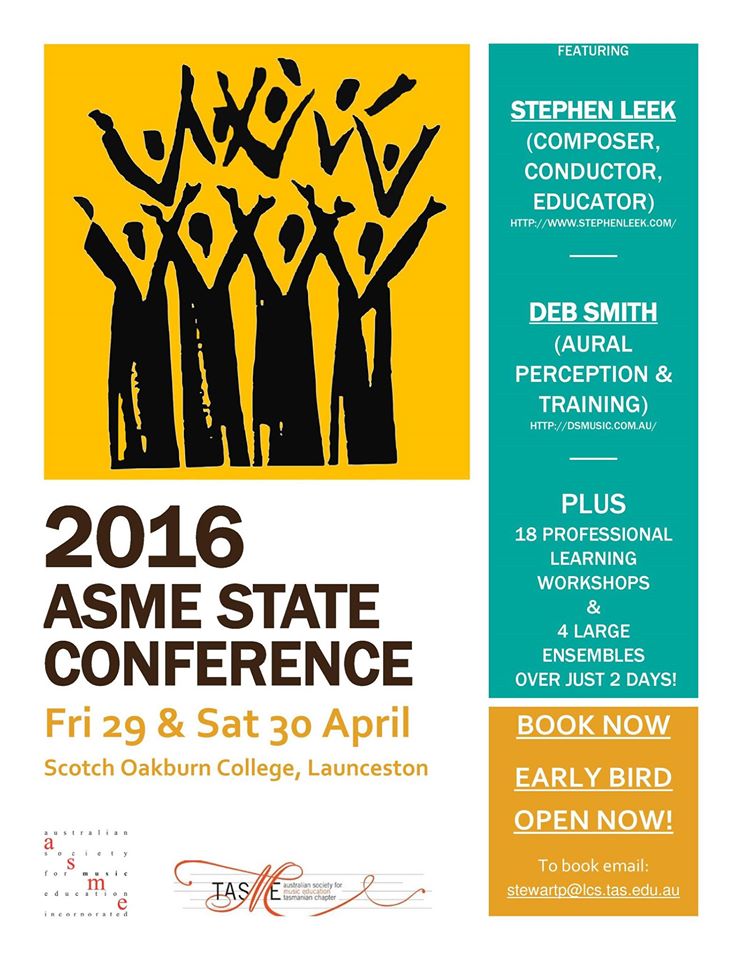
A couple of weeks ago I was one of the key note presenters at the ASME (Tasmanian branch or “TASME” as it’s affectionately known) conference, held at Scotch College Oakburn in Launceston.
Having never been a key note speaker before and having never visited Launceston either I was VERY excited (and just a tad nervous).
I need not have worried – I was made to feel most welcome by the wonderful committee and all conference attendees and fell in love with the little I managed to see of Launceston.
My key note presentation at the start of the second day was based on a previous blog post “Why Teach Music”. In it I used my reasons for teaching music as a springboard to show teachers some my most successful and favourite teaching activities.
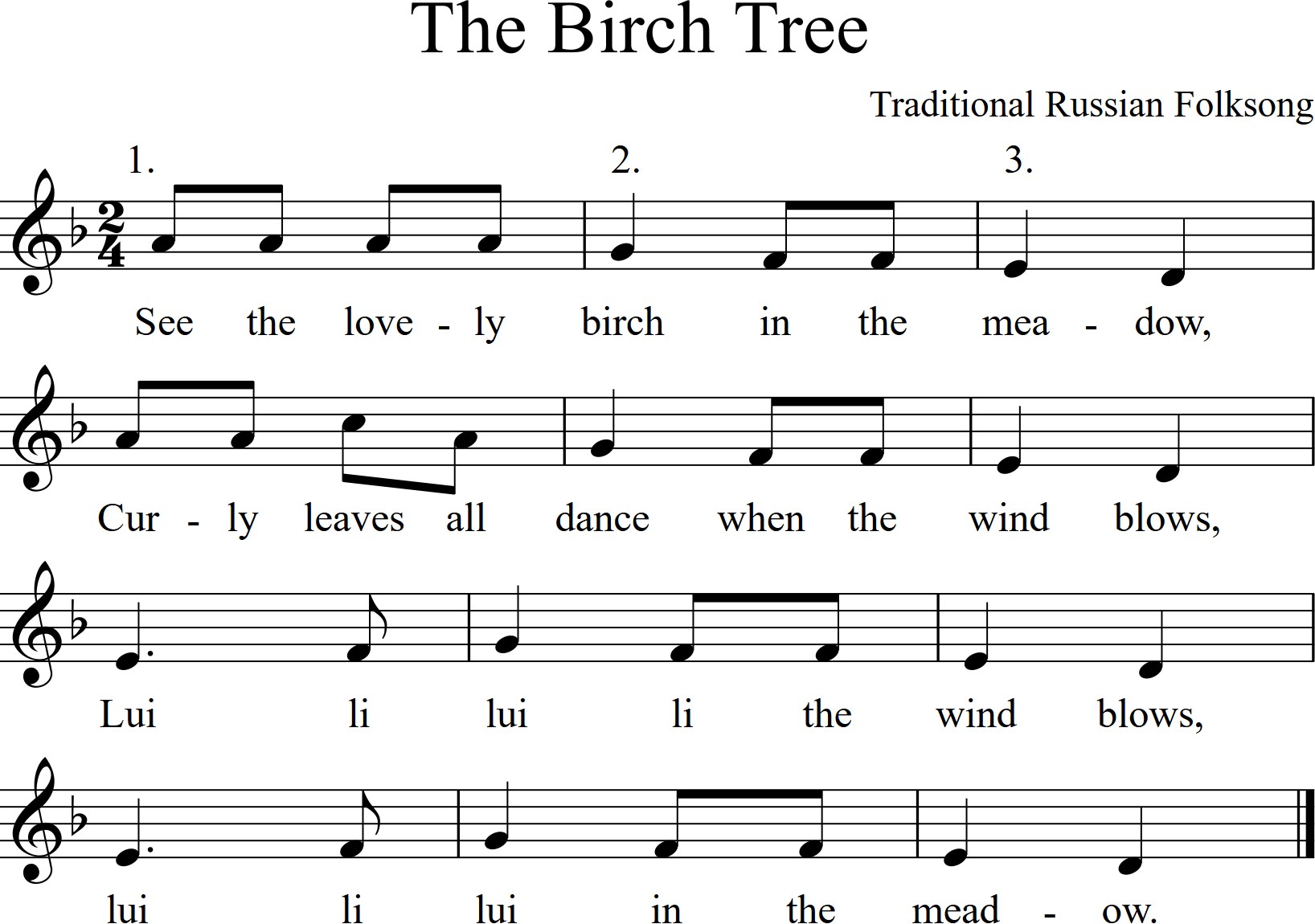
We began by singing the beautiful Russian folksong “The Birch Tree”:
which lead us to listening, analyzing and then watching performances of Tchaikovsky’s Symphony No 4 Mvt :
Link 1 – Audio only recording of the fourth movement, performed by the Bournemouth Symphony Orchestra with Andrew Litton, conductor
Link 2 – Video performed by the San Francisco Symphony, conducted by Michael Tilson Thomas
I shared my experiences of dealing with students who “don’t like” classical music and who then react positively upon hearing the folksong in Tchaikovsky’s great symphony. Coming from what our students DO know to what they DON’T is a great way of introducing them to new listening experiences. (BTW – it doesn’t matter if they don’t like it – we are there as TEACHERS – to TEACH them and give them new experiences so don’t be put off by these sorts of responses and most certainly DO NOT give up. Also – don’t ask if they like it. It does not matter!)
We had a brief overview of how the study of all things musical teaches perseverance and the ability to work at something for a LONG time before achieving success. This was followed by a highly academic example of perseverance in the form of a video with a dog and a sausage:
Of course I had to show the obligatory (but wonderful all the same) research about how GREAT the study of music as a language is for building and improving other skills in the classroom. Click on the photo below to go to the video.

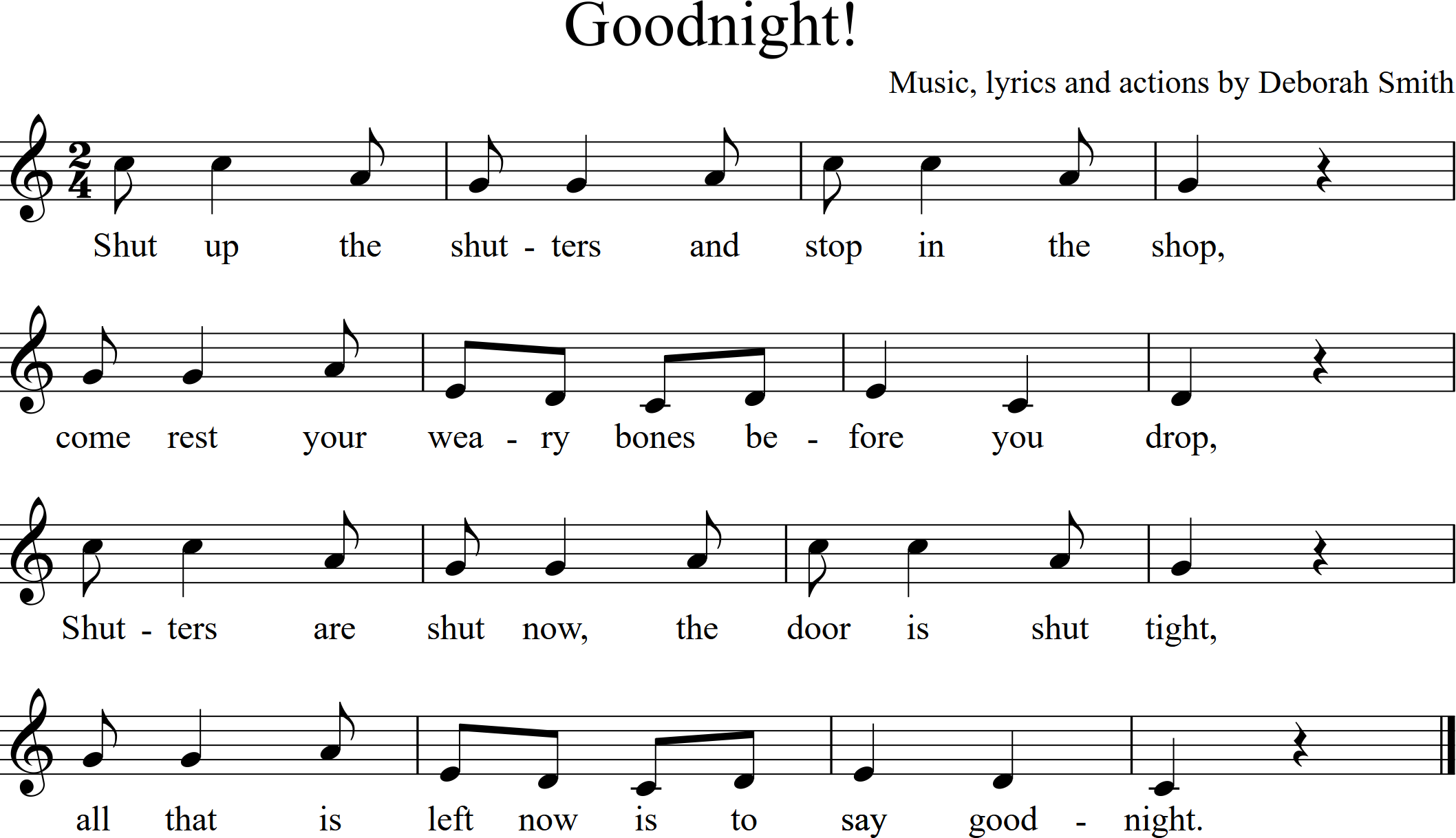
We finished up the session with everyone learning a new game I created the week before the conference and if the laughter was anything to go by the teachers all had a lot of fun. Those of you who were there – you will notice I have changed the word at the start of the third bar from “sit” to “stop” for reasons some of you discovered last Saturday!
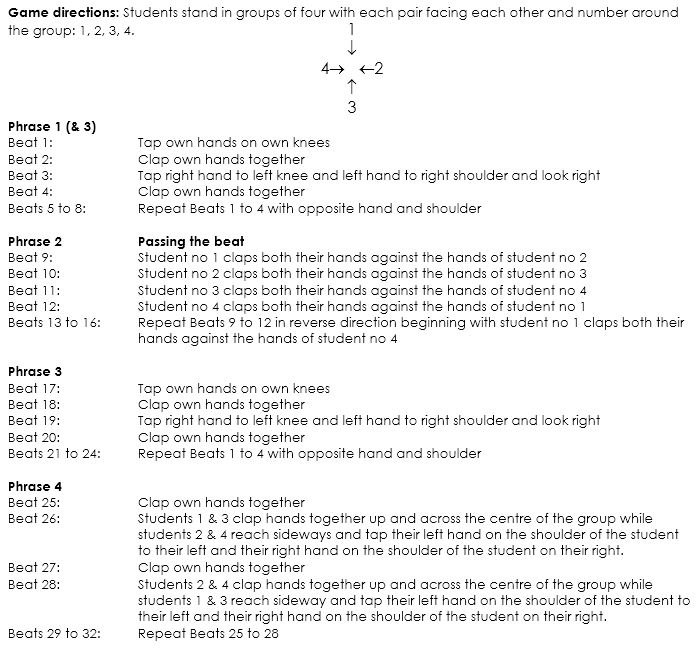
If you would like to have a look at the handout from the key note presentation please click here and ENJOY!
A Few of my Favourite ….. Interval Activities
I was recently struck by how many activities we need to keep our students interested and engaged in our music classes.
If we teach something to our 4 year old students (e.g. “beat”) then we need to have sufficient practice activities to challenge our students enough to keep them practicing “beat” for as long as we continue to teach them – in some cases up to Year 12.
So I’ve decided to share some of my favourite activities (suitable for all levels – just adjust the content to suit) which I hope you will find useful.
This blogpost deals with Interval activities. Keep a look out for the next “A Few of my Favourite…..”
Interval Bingo
Teacher hands out laminated bingo cards (like the ones on the image above) with 9 interval names (if fewer interval names are known then intervals can be repeated on the card) on it and a whiteboard marker or 9 tokens to each student.
Teacher sings an interval (on a neutral syllable) from the master sheet (which is then crossed off).
Students sing it back (on a neutral syllable).
Students mark (with whiteboard marker or playing token) the interval off if on their sheet.
Class sings the interval again in solfa as teacher or student writes on the board to check.
To win BINGO a student must have any three across, down, or diagonally or for the longer version – all the rhythms – like regular BINGO.
Flashcard Knockout (Interval Musical Chairs)
Requirements: Interval flashcards – one per student. There can be more than one card with the same interval name. Click on the image below for free printable interval flashcards.
Teacher puts one flashcard per number of students with the names of known intervals on the floor. 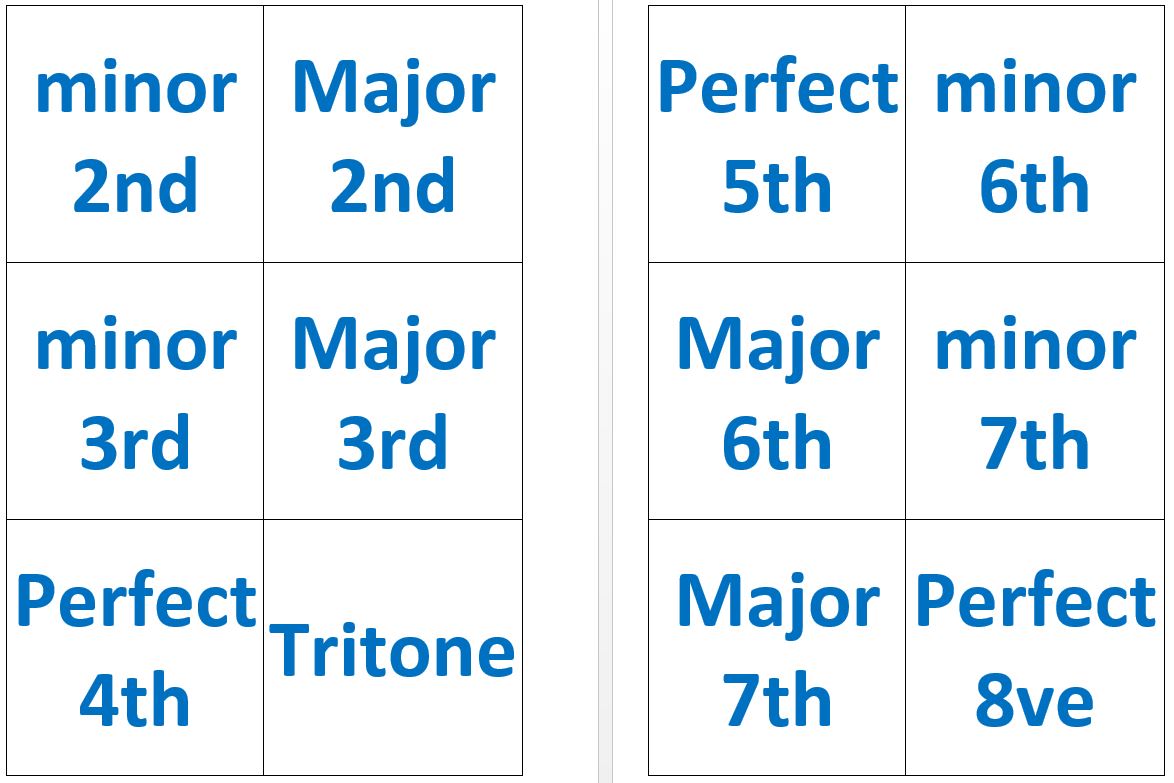
Students walk around as the teacher plays some music (I use this chance to play the work we are studying in the “Listening” part of the course).
When the music stops they stand on a flashcard.
The teacher then sings or plays an interval from one of the flashcards. If a student is standing on the flashcard with the interval sung or played they sit down. If they are correct they stand to continue the game. If they are wrong then they are “out”.
Interval knockout.
Students stand with their eyes closed.
Teacher sings a known interval on a neutral syllable.
For example, if the teacher sings a Major 2nd, students would hold up two fingers. They would hold three fingers pointing down for a minor 3rd and three fingers pointing up for a Major 3rd and so on.
To correct, the class sing the interval on the neutral syllable and then label it i.e. “Maj-or 3rd”.
Students showing the correct interval remain standing, those with the incorrect interval sit down.
Interval Lines
Read this interval line from the board by beginning on the given solfa note then singing the note suggested by interval quality and arrow.

If sung correctly an interval line will end on the starting note.
Here is the above interval line written out on the staff:
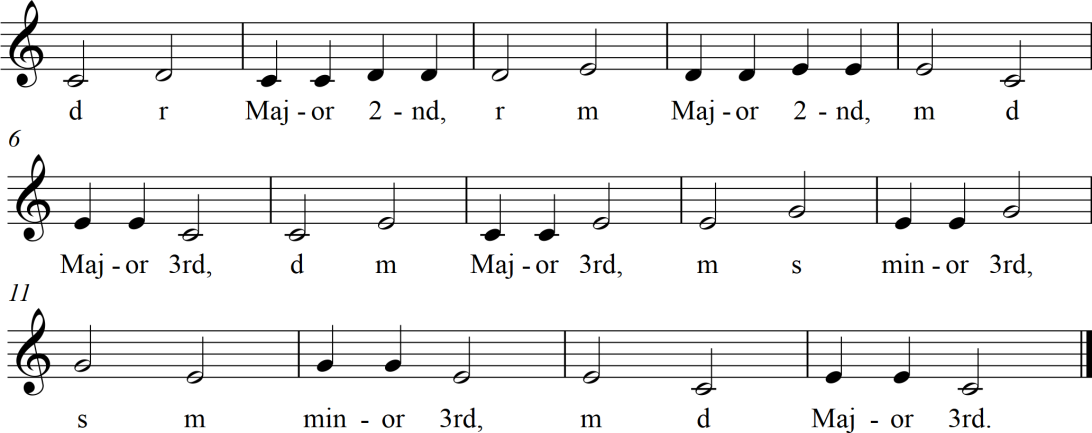
Asking students to create their own interval lines is a great way to ensure they understand the intervals that can be found in a particular scale.
How do you practice intervals with your classes?
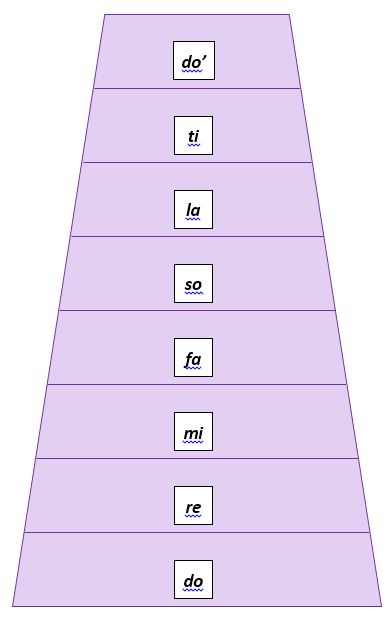
Tone Ladders are a great way of
visually representing pitch in an
intervallically accurate way –
that is so long as the intervals
between the notes are represented
accurately on the tone ladder.
For example, if a tone ladder looks like this: 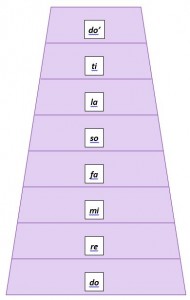 or this:
it is NOT representative of the different intervals between the notes e.g. of a Major 2nd or a minor 2nd.
This type of tone ladder :  shows the exact intervallic relationship between the notes.
For example, do to re is a Major 2nd while mi to fa is a minor 2nd
as you can see by the distance between the notes on the ladder: 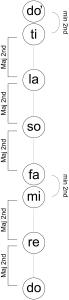
In fact for our “pitch challenged” students, a tone ladder can be clearer than the actual music staff itself for showing which intervals come where.

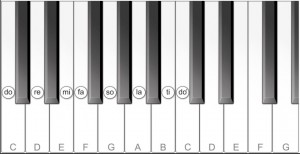
There are many types of tone ladders.
The ones you see above using solfa note names in
circles – created for the Musicianship & Aural Training
series of books – have the advantage of being able to
be imposed on top of a keyboard thereby adding to
the visually clarity:
Other formats of tone ladders such as: 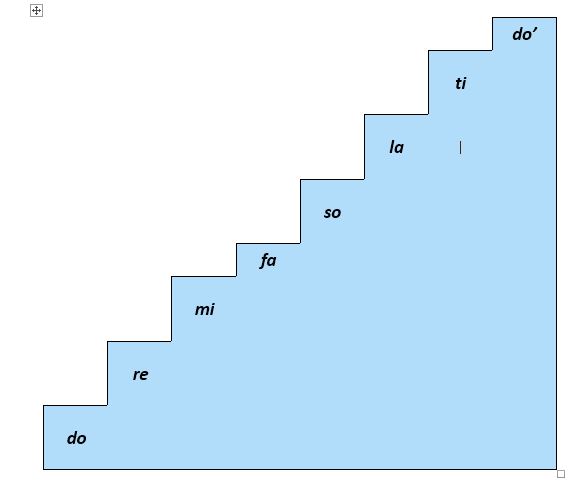
are great, particularly for younger students, as long as they are intervalically accurate.
Some tone ladders that I absolutely love are these: 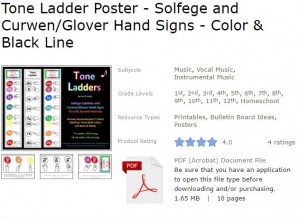
(click on the photo for more details) created by Musical Magic and available for download from the Teachers Pay Teachers online store. In this particular set there are 12 downloadable and printable pages of visually (intervallically) correct tone ladders WITH HANDSIGNS and in great vibrant colours that would be great on your classroom wall! (Photo used with permission from the “Musical Magic TpT Shop”: https://www.teacherspayteachers.com/Store/Musical-Magic Click on the photo to be taken directly to this product).
How do I use a Tone Ladder?

If you like the tone ladders created for the Musicianship & Aural Training series email Deb at deborah@dsmusic.com.au for any you’d like and she’ll email them to you.
How do YOU use tone ladders?
What ARE the Three “Ps”
One of the first things an aspiring Kodály teacher is taught when embarking upon any Kodály course are the Three Ps – Prepare, Present and Practice. These three things form the basis of the process we use to teach ANY and EVERY element of music. Our belief is that students should KNOW everything about a new musical concept BEFORE they learn the actual name and that, once named, that concept is then practiced in as many ways as possible FOREVER!
 Preparation – teaching everything there is to know about a particular musical element without actually naming it!
Present / Make Conscious – naming the already known element
 Practice – self explanatory!
Preparation
How to prepare a rhythmic element:
Aurally – can you hear it?
Visual – can you see it?
Physical – can you feel it?
How to prepare a melodic element:
Aurally – can you hear it?
Visual – can you see it?
Physical – can you feel it?
Present
Make the knowledge conscious – name it!
Rhythm: Students learn the rhythm/time name of the new note:
“When we hear four equal sounds on a beat we say “ti-ka-ti-ka. This is its rhythm name”.
Students learn the English AND American names:
“Musicians call this rhythm “semiquavers” or “sixteenth notes”.
Melody: Students learn the solfa name of the new note: so and associate it with the handsign:
“When we hear the note a skip above mi it is called so.
Students learn the letter names of the new note when written on the staff.
Practice
Early Practice Activities:
Middle Practice Activities:
Late Practice Activities:
Often, when asked to speak at various conferences or workshops on a particular topic, I like to find a quote that reinforces what I am talking about.
Over the years I have put together quite a list which I thought I would share with you.
Of course there are many more great quotes out there that I haven’t yet discovered so PLEASE email me your favorites on deborah@dsmusic.com.au
“If you cannot teach me to fly – teach me to sing” James Barrie (author of “Peter Pan”)
“Tell me & I forget. Teach me & I remember. Involve me & I learn.” Benjamin Franklin
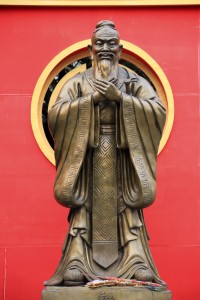
“I hear and I forget. I see and I remember. I do and I understand.” Confucius
“Music education opens doors that help children pass from school into the world around them – a world of work, culture, intellectual activity, and human involvement. The future of our nation depends on providing our children with a complete education that includes music.” Gerald Ford
“Some people think music education is a privilege, but I think it’s essential to being human.” Jewel
“I always loved music; whoso has skill in this art is of good temperament, fitted for all things. We must teach music in schools; a schoolmaster ought to have skill in music, or I would not regard him.” Martin Luther
“Teaching music is not my main purpose. I want to make good citizens. If children hear fine music from the day of their birth and learn to play it, they develop sensitivity, discipline and endurance. They get a beautiful heart.” Shinichi Suzuki
“Music education can help spark a child’s imagination or ignite a lifetime of passion. Music education should not be a privilege for a lucky few, it should be a part of every child’s world of possiblity.” Hillary Rodham Clinton
“Instrumentalists can best interpret a work if they sing it to themselves first.” Toscanini
“Music expresses that which cannot be said and on which it is impossible to be silent.” Victor Hugo
“Music is a discipline, and a mistress of order and good manners, she makes the people milder and gentler, more moral and more reasonable.” Martin Luther
“Music hath charms to soothe a savage breast, to soften rocks, or to bend a knotted oak.” William Congreve
“Music is a more potent instrument than any other for education, because rhythm and harmony find their way into the inward places of the soul.” Plato
“If you can walk you can dance. If you can talk you can sing.” Zimbabwe Proverb
“Music washes away from the soul the dust of everyday life.” Berthold Auerbach
“Alas for those that never sing, but die with all their music in them!” Oliver Wendell Holmes
“He who sings scares away his woes.” Cervantes
“Music produces a kind of pleasure which human nature cannot do without.” Confucius
“Music is the language of the spirit. It opens the secret of life bringing peace, abolishing strife.” Kahlil Gibran
“Music isn’t just learning notes and playing them, you learn notes to play to the music of your soul.” Katie Greenwood
“Without music, life would be a mistake.” Friedrich Nietzsche
“Music is a moral law. It gives soul to the universe, wings to the mind, flight to the imagination, and charm and gaiety to life and to everything.” Plato
“Success does not consist in never making mistakes but in never making the same one a second time.” George Bernard Shaw

“Why do we teach music? Not because we expect you to major in music. Not because we expect you to play and sing all your life. Not so you can relax. But so you will be human. So you will recognise beauty. So you will be sensitive. So you will have something to cling to. So you will have more love, compassion, more gentleness, more good, in short, more life. Of what value will it be to make a prosperous living unless you know how to live? That is why we teach music.” Unknown
As we (in Australia at least) are drawing near to end of another school year, this will be my last post for 2015.
I wish you all a wonderful holiday celebration wherever and whoever you are and I look forward to working with you again to create a wonderful world full of music in February 2016. Warmest regards
Deb
Since the beginning of this year I have been VERY busy creating teaching videos based on lessons and concepts taught in my Musicianship & Aural Training for the Secondary School series of books and CDs.
Music educators know that being a Kodály /music literacy teacher can be a tough gig – all the planning, preparation, thinking, learning that goes into every single lesson not to mention all the study you need to have done in order to be able to do all this planning, preparation etc. In the quarter of a century that I have teaching this way I have seen the music teachers around me get busier and busier with more and more expected of them every year. Where does that leave them the time to do everything that as conscientious music teachers we know we need to do in order to make the most of the (ever diminishing) time we spend with our students?
THAT is where I come in. Since I am no longer in the classroom full time I have the time to create resources for you to help you teach at your best every time you walk into a class. And that’s where these new videos come in.
If you own any of my teacher books then hopefully you know about all the teacher lesson plans (which have the “how to prepare, present and practice” details you need) found in the books themselves:
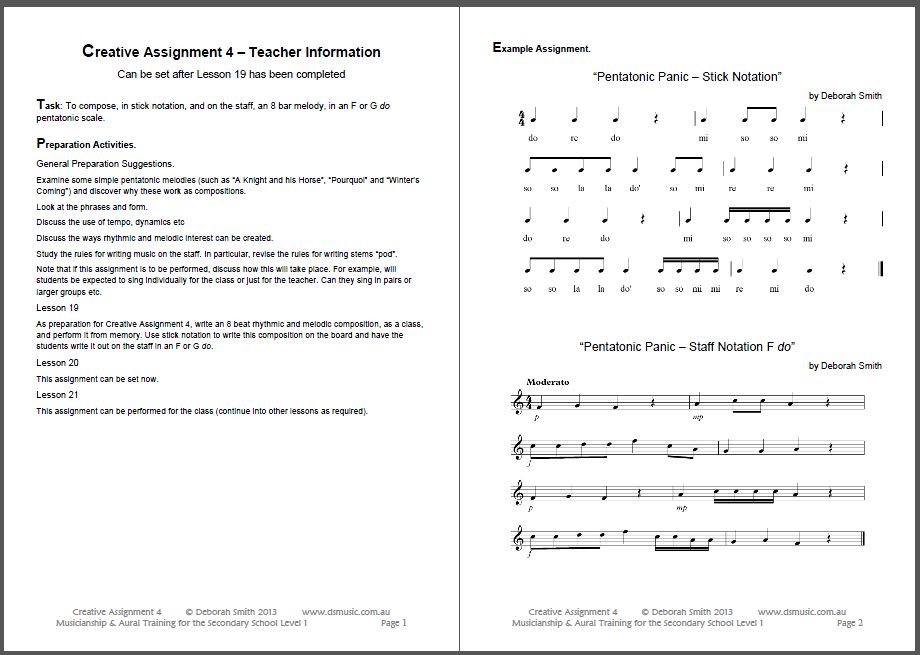
These are supported by all of the online resources that are available on the website: assignments (with everything you could need to teach the concepts assessed in these):
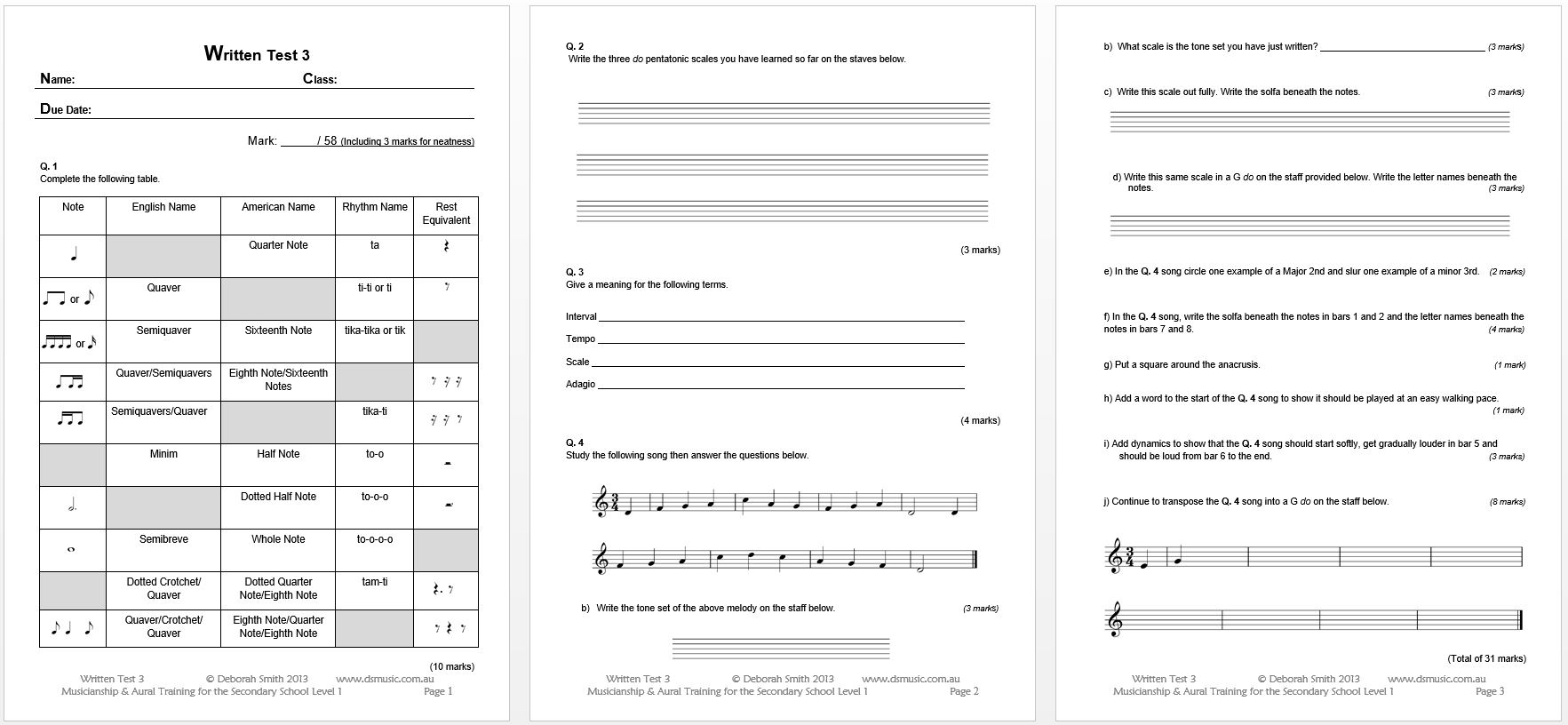
aural and written tests:
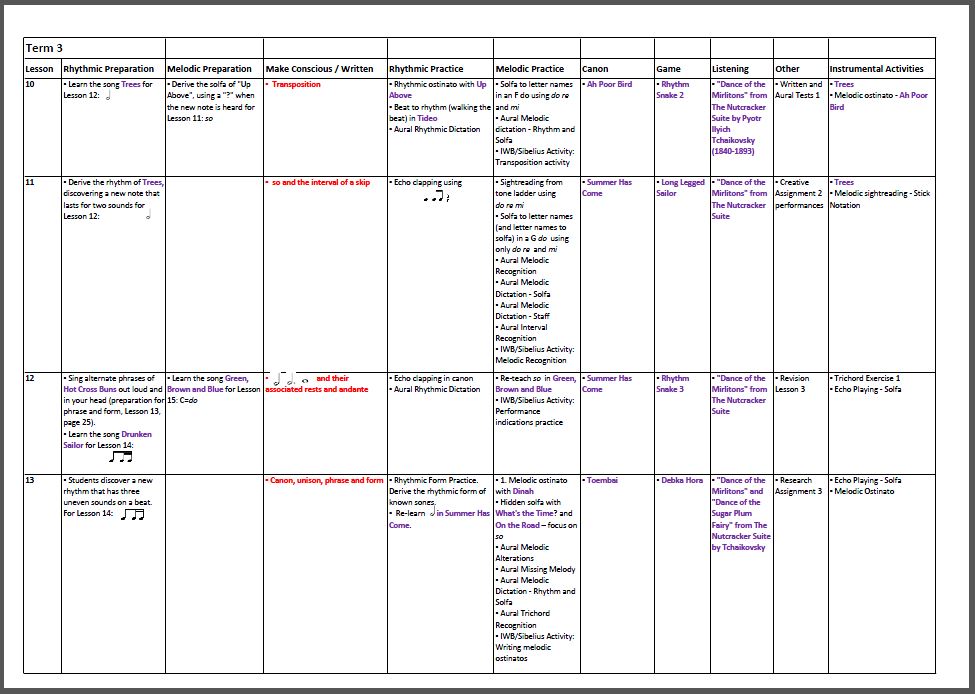
curriculum documents:
song, game and canon materials:
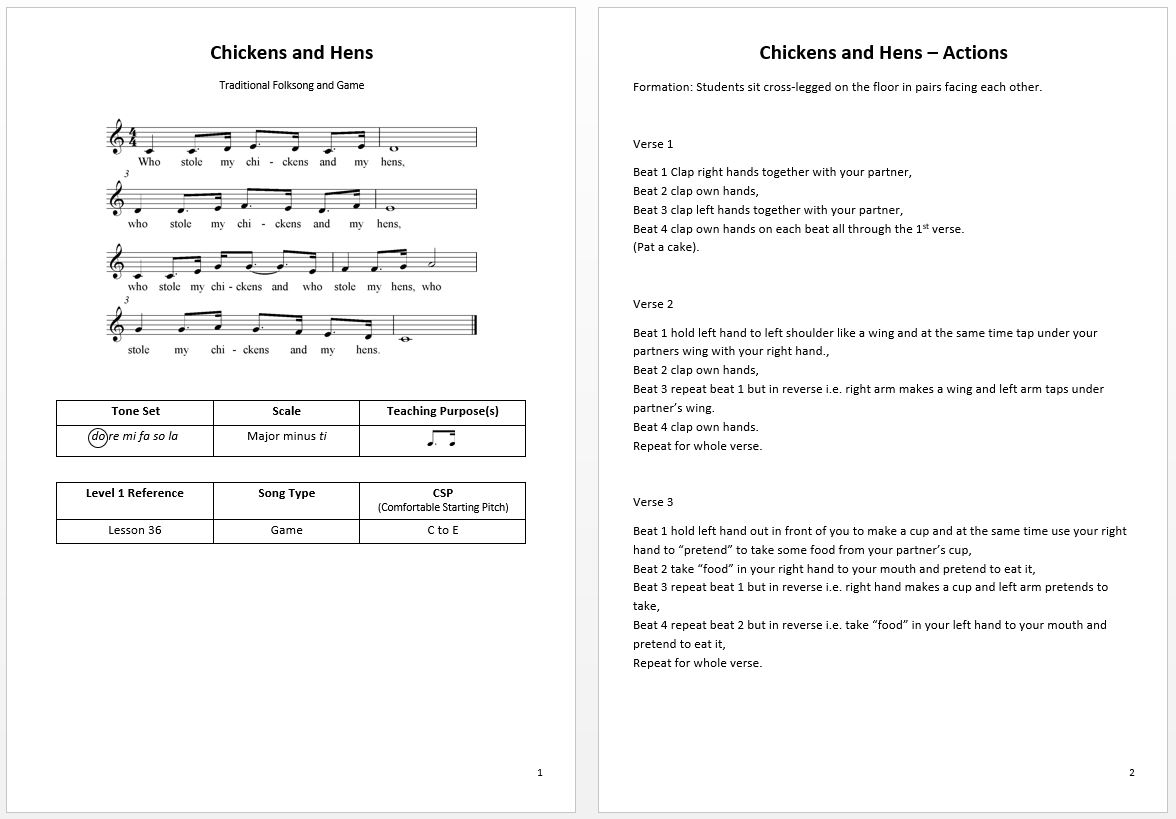
the list goes on and on.
These new videos complete these resources by helping you with the actual teaching/practicing of the concepts and skills taught in your classrooms.
As an experienced teacher with Kodály training these videos support what you already do so well. Use them to revise a new concept or skill, for students who were absent in the “present” lesson’ or to teach the concept or skill on a day where you and/or your voice are not 100%.
For more senior students these videos can be set as homework to teach or revise a concept.
The 100s of practice videos can be used by your students, ensuring they are practicing correctly every time.
As a beginning teacher, these videos can be viewed prior to teaching a new concept to your class to help clarify the process in the teacher’s mind before passing it on the the students. Of course they can be used to actually teach the concept itself and/or practice it once learned.
These videos are great teaching tools when you are absent but wish your students to continue learning, or for those days when you “volunteered” to take two classes together so your ill colleague’s class doesn’t miss out.
The options are endless.
Hopefully whichever way you choose to use them makes your life easier and lifts some of the planning stress from your shoulders.
Enjoy!
Deb
For further ideas and resources or to purchase the books go to dsmusic.com.au
See Deb’s YouTube channel for more videos – subscribe so you don’t miss out on the new ones uploaded every week!
To request resources not on the DSMusic website, please email Deb at deborah@dsmusic.com.au
Improvising and Composing are NOT Scary!
As a teacher I often avoid the things that I think I am not good at e.g. improvising and composing. Of course I CAN improvise and compose but I am not comfortable improvising and composing.
Does this mean I shouldn’t teach my students how to improvise and compose? Of course not!
The best way to think of these two, closely linked but still unique, activities is as another teaching tool like all the others we use in our classrooms (solfege, rhythm names, tone ladders, instruments etc). The only thing to consider before attempting any of these tasks is that they are both LATE practice activities for any concept i.e. students must know the elements they are improvising or composing with extremely well or the activity may be a disaster for all!
So here are some things to think about when creating improvising and composing activities for your students.
Improvising and Composing are:
To create successful improvising and composing activities in your classroom:
Easy ideas to begin with:
Ramping up the difficulty a little:
Advanced activities:
One task for many students:
Improvising and composing tasks are very easy to set for students at various different levels of ability. A task can be made easier by asking for a shorter improvisation or composition, giving some of the task already completed for them to finish or by limiting the elements allowed to be included.
In the same way a task can be made more difficult by extending the length of the task, adding more elements, adding a second part etc.
As usual there are heaps of ideas in my Level 1 and Level 2 Teacher books.
Other ideas:
Choksy, L The Kodaly Method. Published by Prentice Hall, New Jersey.
Johnson, J Practise Makes Perfect. Published by Clayfield School of Music, Brisbane.
Hi and welcome to the “Post with a Difference“.
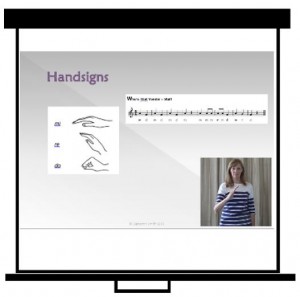
This week’s post takes the form of a video I came up with to show teachers the HUGE number of resources that are available on the DSMusic website.
In particular, this video focuses on the Level 1 Digital Resources (Lower Secondary/High School – Years 7 & 8) however all the Levels have their own Digital Resource sections with literally HUNDREDS of resources that are completely FREE once you own the book. (Don’t despair if you don’t own the books though – all the videos are available on the dsmusicianship YouTube channel and many of the worksheets etc are available in the free resources section of the website. If you do like the books and resources though, please help support what I do and put the student books on your booklist!)
Enjoy!
DIGITAL & ONLINE RESOURCES INCLUDE:
For further ideas and resources or to purchase the books go to dsmusic.com.au
To request resources not on the DSMusic website, please email Deb at deborah@dsmusic.com.au

I frequently teach older students (17 and 18 year olds) for long periods of time at a stretch. I want to break up these sessions to keep their concentration levels up, but don’t want to let them take a real break as they tend to take twice as long as I allow (“I had to wait at the coffee cart for ages Miss….”).
I find that many of the traditional games are too “childish” for these young adults to participate in with pleasure so often I take an existing song (perhaps with a dance or actions I have used in earlier years with these students) and add movement to it. I try to make sure the activity has pedagogical value as well.
Here is one example I find works very well.
Gut Sabat Euch! Traditional Yiddish folksong
(Also Gut Shabbas Eich and various other spellings)
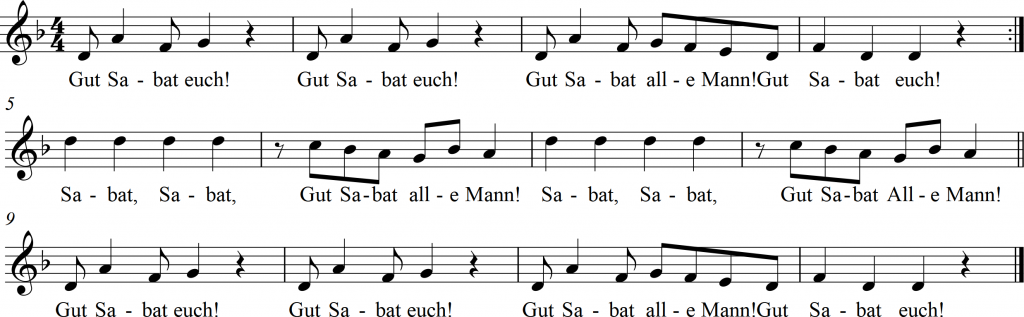
The song itself is great practice of the natural minor scale and syn-co-pa and has a lovely folk dance that traditionally goes with it (see instructions below). I don’t use the words as the solfa is much easier!
With these older students we sing the song (several times if necessary) in solfa and discuss the tonality. We add walking the beat as we sing again.
The next step is to sing the song in solfa, walk the beat and tap this ostinato (yes, all at the same time!): 
Once this has been mastered, tap the beat (or even conduct) and walk the ostinato – quite a challenge!
Students can create their own ostinati to take this activity even further. I would love to hear any ideas like this you may have that work well with your young adults!
Here are the instructions for the traditional folk dance:
Formation:
Students form a single circle with outstretched arms resting on the shoulders of the person on either side.
Section 1 (Bars 1 to 4):
Beat 1: Side step to the right with the right foot
Beat 2: Side step left foot BEHIND right foot
Beat 3: Side step to the right with the right foot
Beat 4: Swing left leg in front of right with a slight hop on the right leg
Beat 5: Side step to the left with the left foot
Beat 6: Side step right foot BEHIND left foot
Beat 7: Side step to the left with the left foot
Beat 8: Swing right leg in front of left with a slight hop on the left leg
Beat 9: Side step to the right with the right foot
Beat 10: Side step left foot BEHIND right foot
Beat 11: Side step to the right with the right foot
Beat 12: Side step left foot BEHIND right foot
Beat 13: Side step to the right with the right foot
Beat 14: Swing left leg in front of right with a slight hop on the right leg
Beat 15: Repeat beat 14
Beat 16: wait
Beats 17 to 32: Repeat in reverse direction.

Section 2 (Bars 5 to 8):
Beats 1 – 4: Individually students circle to the right on the spot clicking their fingers held above their heads on each beat
Beat 5: Stamp right foot and clap hands,
Beat 6: Swing left leg in front of right with a slight hop on the right leg and clap hands
Beat 7: Stamp left foot and clap hands,
Beat 8: Swing right leg in front of left with a slight hop on the left leg and clap hands
Beats 9 to 16: Repeat in reverse direction.
Section 1 (Bars 9 to 12): Repeat Section 1 (Bars 1 to 4) actions.
Two variations of the traditional dance can be seen here:
“We should see the child as the musician and the instrument as the expression of the inner musician”.
The use of musical games and movement activities in instrumental programs of any kind enhances our students’ enjoyment of music and fosters a positive attitude within the classroom.
It can be an introduction to singing for students in a non-threatening environment (where “singing” is not the focus and therefore not intimidating). Activities involving movement, such as the games and activities presented in this workshop, can also give students (and their teachers) a “break” in concentration during a long instrumental ensemble music lesson or rehearsal and consequently can reinvigorate the class for the rest of the lesson’s activities.
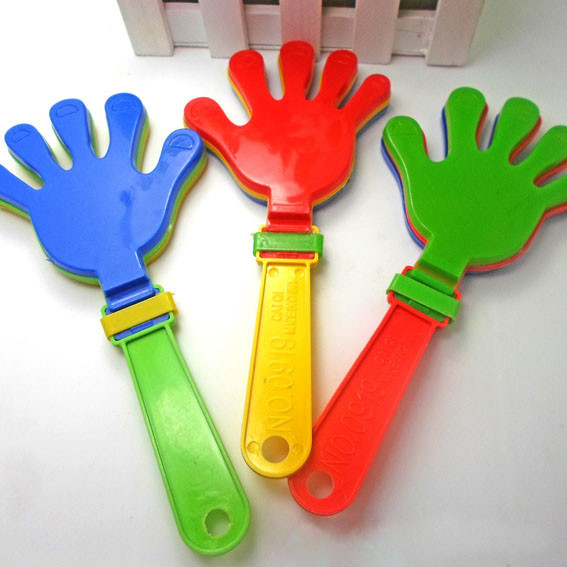 Movement Activity Examples
Here are a couple of great games that work well with ensembles:
Give Me A Hut Traditional Australian folksong, game instructions by Deborah Smith.

Formation: Stu dents sit in a single circle holding their hands out in front of the people beside them. Their left hand should face up under the person’s hand on their left and their right hand should face down on top of the person’s hand on the right.
Actions: On each beat for the first six beats, using your right hand, hit your neighbour’s left hand then your right knee, your left knee, under your left hand then clap on top of your left hand twice.
For the next six beats, using your left hand, hit your neighbour’s right hand then your left knee, your right knee, under your right hand then clap on top of your right hand twice. Repeat to end of song.
Find A Juicy Bone Song and Game by Jenny Gillan (jennygillan.com.au)


Formation: Students standing in pairs facing their partners.
Actions:
Beat 1 Pat own knees Beat 2 Clap own hands together
Beat 3 Clap both hands to partners’ both hands Beat 4 Clap own hands together
Beat 5 Clap RH to partner’s RH Beat 6 Clap own hands together
Beat 7 Clap LH to partners’ LH Beat 8 Clap own hands together
Beat 9 LH palm facing down claps partner’s RH palm facing up WHILE RH palm facing up claps partner’s LH palm facing down.
Beat 10 Clap own hands together
Beat 11 LH palm facing UP claps partner’s RH palm facing DOWN WHILE RH palm facing DOWN claps partner’s LH palm facing UP
Beat 12 Clap own hands together
Beat 13 Hands palms together tap partner’s hands closed together – back of left hands touching and stay touched for whole of action
Beat 14 Clap right hand to partner’s RH above hands together.
Beat 15 Clap (while left back of hands are still joined together)
Beat 16 Clap Right hand to partner’s RH below Left hands, which are still joined together
So these are just a few of the ideas that keep ALL my students engaged in my ensemble classes and rehearsals. Don’t forget to have a look at dsmusic.com.au for lots more ideas and resources!
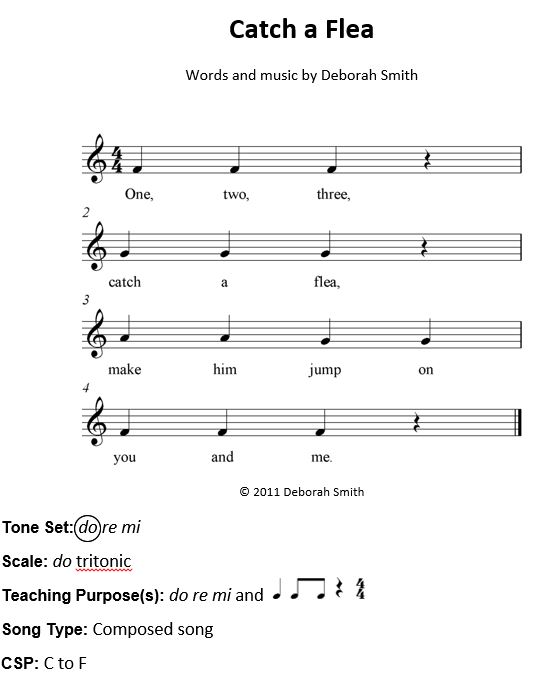
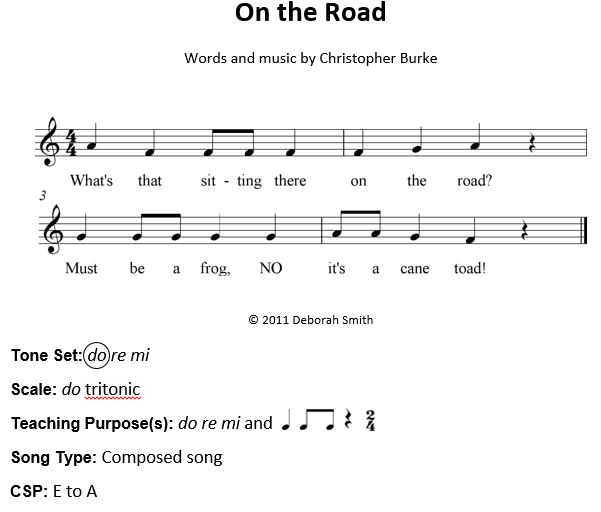
Tired of the same old do re mi songs?
Me too.
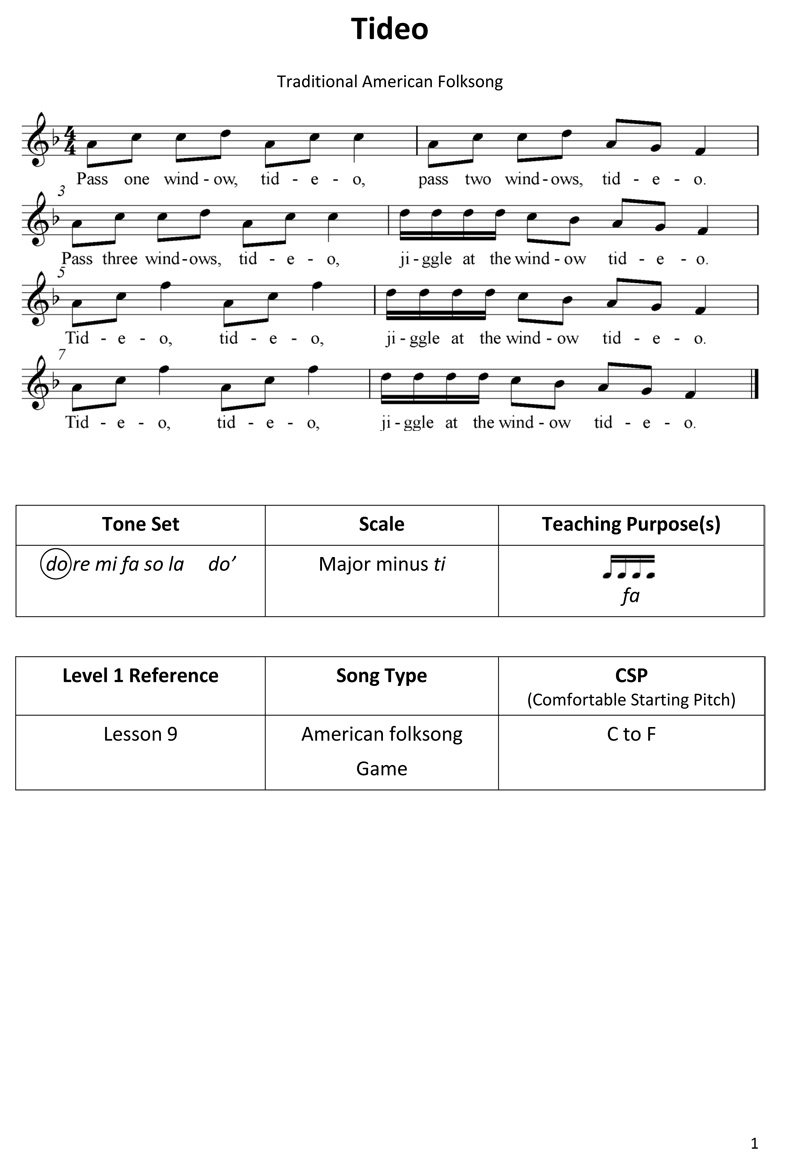
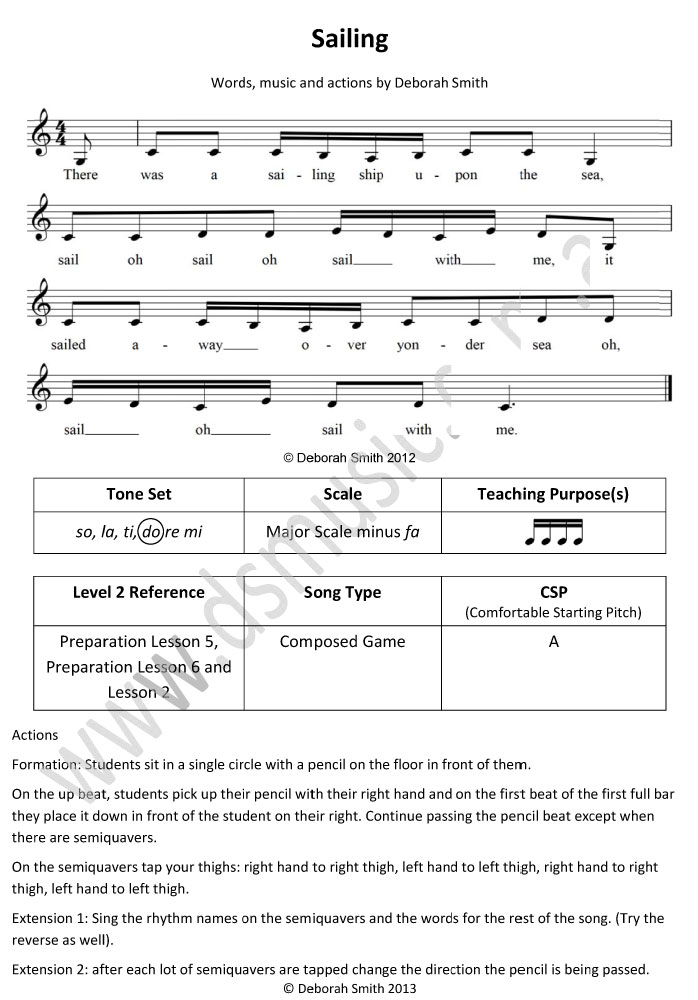
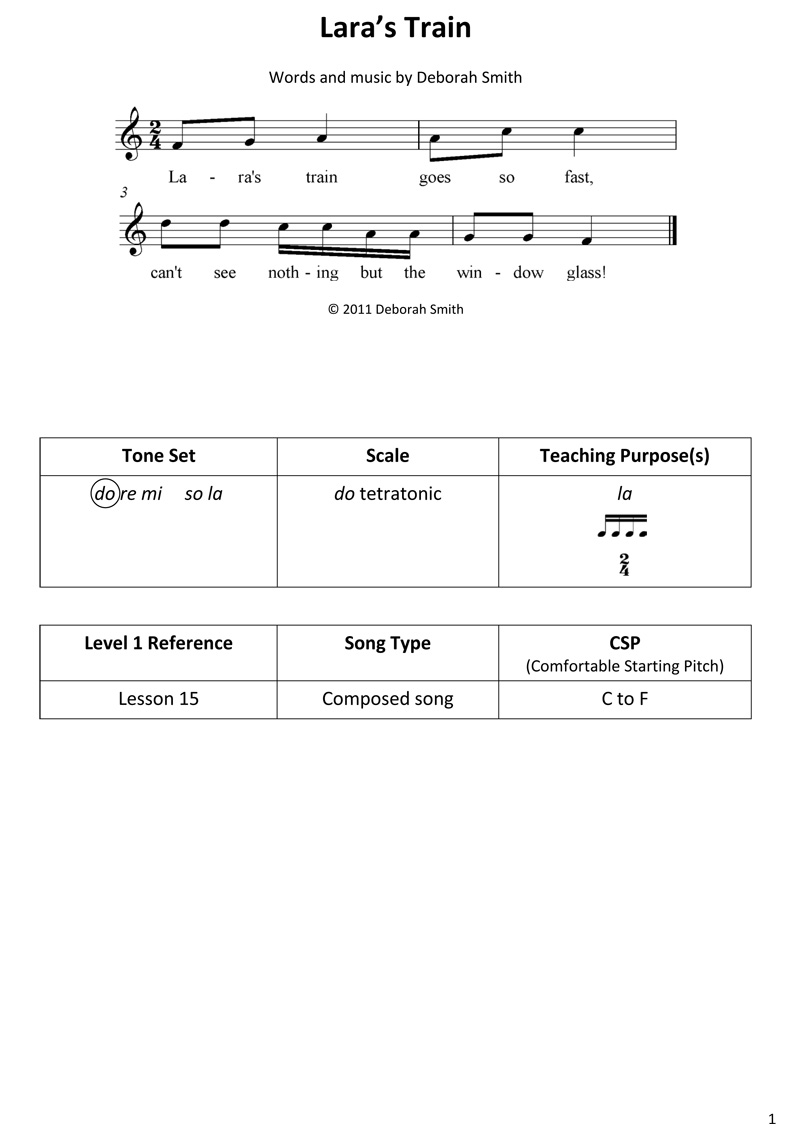
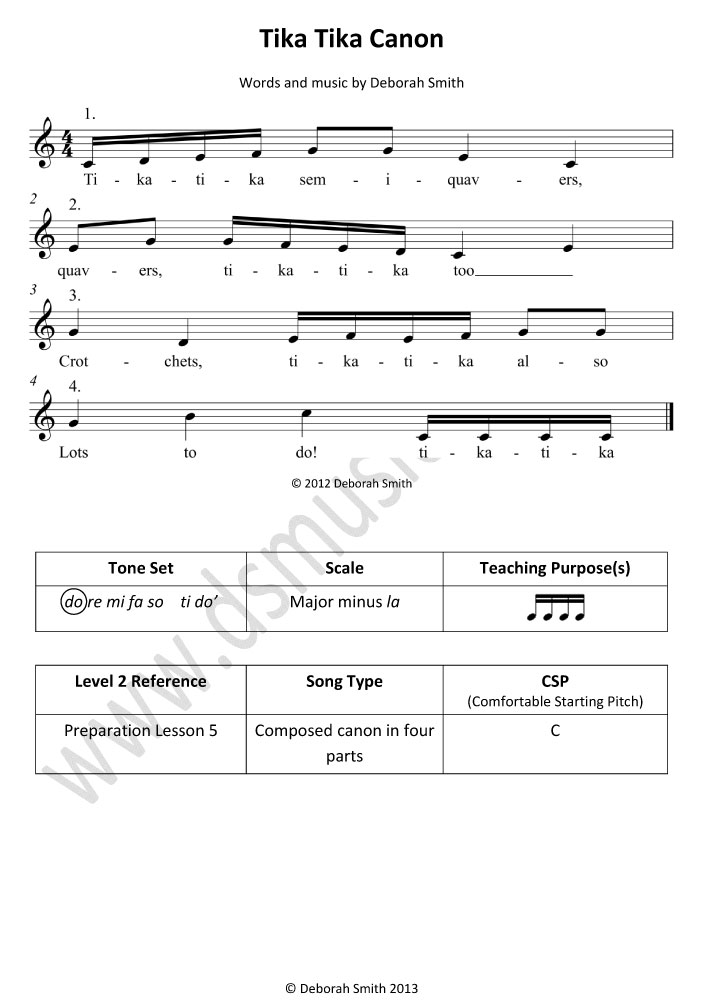
So here are four you may not know for your song collection.

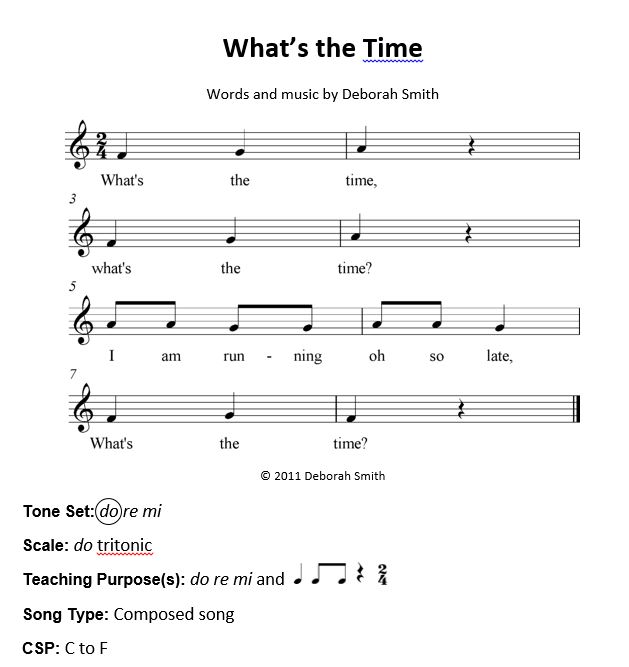
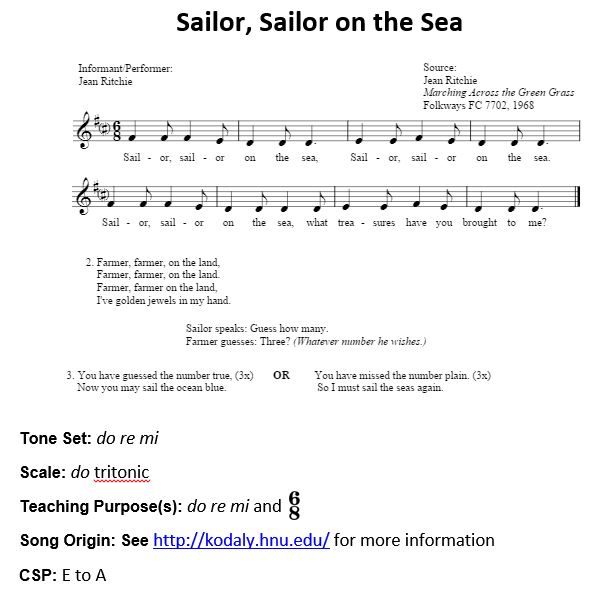
Girl with clock and pirate images courtesy of photostock
Bored teacher image courtesy of saphatthachat
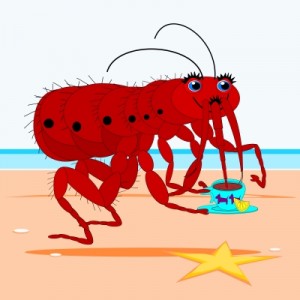
Flea image courtesy of debspoons
All available at FreeDigitalPhotos.net